
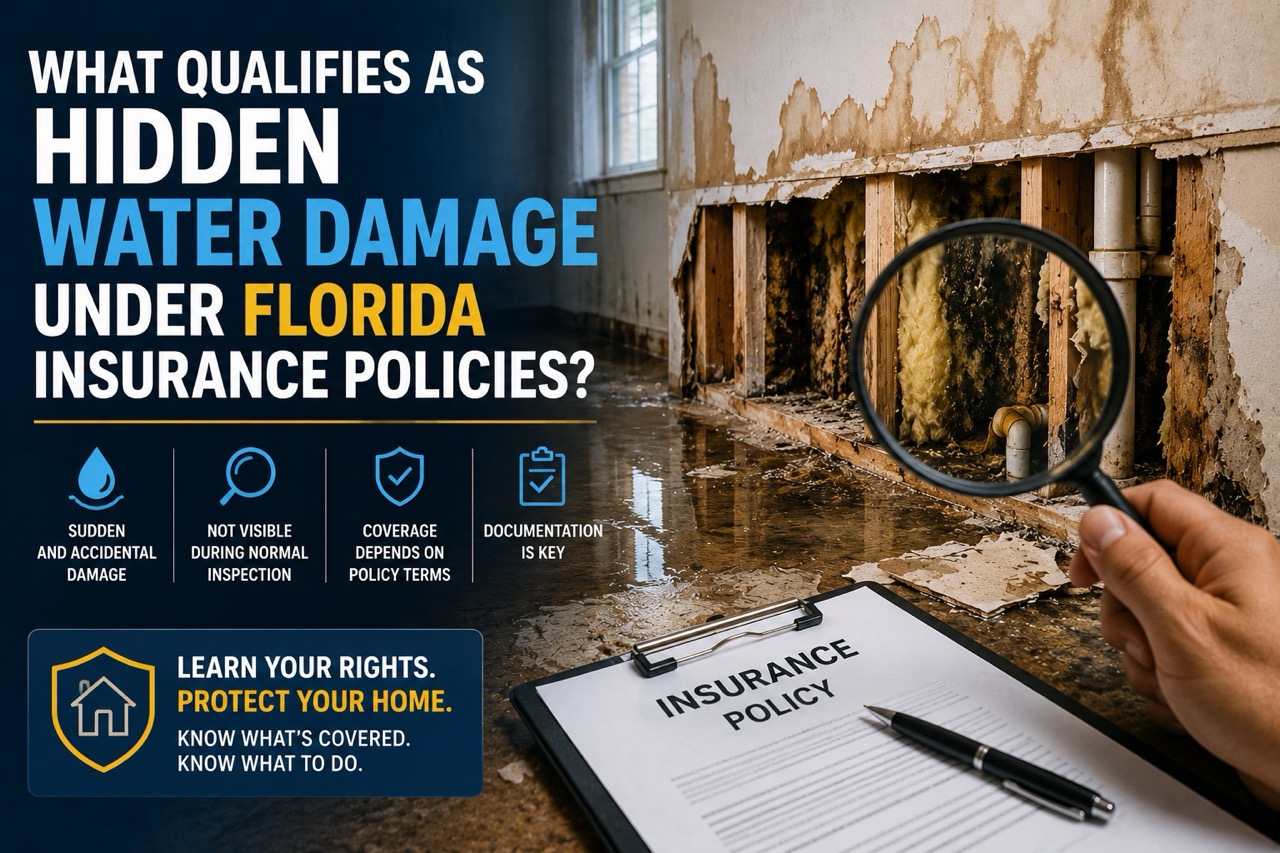
What Qualifies as Hidden Water Damage Under Florida Insurance Policies?
Water damage does not always announce itself. Leaks behind walls, under floors, and above ceilings can cause serious structural problems before a homeowner ever notices a sign. By the time the damage becomes visible, the repair costs can be significant. Many Florida homeowners then face a critical question: does my insurance cover this?
The answer depends on several factors, including the source of the water, how quickly the damage was discovered, and the specific language in your policy. In this guide, you will learn what qualifies as hidden water damage under Florida insurance policies, when coverage applies, and what to do if your claim is denied.
What Is Considered Hidden Water Damage?
Hidden water damage refers to moisture-related damage that develops out of sight and is not reasonably detectable during normal property maintenance. It is damage a homeowner could not have found through a basic visual inspection of their home.
Coverage for hidden water damage often depends on three things: the source of the water, how long the damage was occurring before it was found, and the exact language written into your specific insurance policy. Not all water damage is treated the same way by Florida insurers, and the distinction between sudden damage and gradual deterioration plays a major role in whether your claim gets approved.
Where Hidden Water Damage Hides in Florida Homes
Florida homes face water intrusion risks that homeowners in other states rarely encounter. High humidity, intense storm seasons, and aging plumbing infrastructure all create conditions where hidden water damage can develop and spread rapidly. The damage often starts in places no one thinks to look. Here are the most common locations where hidden water damage causes serious problems.
Leaking Pipes Behind Walls
Slow plumbing leaks are among the most damaging and least visible sources of water damage in Florida homes. A pinhole leak in a supply line can saturate wall framing and insulation for months before any outward sign appears.
Damaged supply lines and failing pipe joints are especially common in older homes. By the time a homeowner notices a soft spot in drywall or discoloration on a wall surface, the structural damage behind it is often extensive. These are precisely the situations where a Florida property damage lawyer can make a meaningful difference in your claim outcome.
Water Damage Beneath Flooring
Subfloor deterioration is a costly and frequently misunderstood form of hidden water damage. Moisture trapped beneath tile, laminate, or hardwood flooring weakens the subfloor structure over time.
Homeowners often dismiss early signs like slight squeaking or minor unevenness. By the time the damage becomes obvious, full subfloor replacement may be necessary. Insurers commonly dispute whether this type of damage was sudden or gradual, which directly affects coverage.
Ceiling and Attic Leaks
Roof-related water intrusion frequently enters through compromised shingles, damaged flashing, or poorly sealed vents. In Florida’s hurricane-prone climate, even a small gap can allow significant water entry during a storm.
HVAC condensation is another overlooked source. Air handlers installed in attics can produce excess moisture that soaks insulation and wooden structural members without triggering any visible ceiling stain until the damage is severe.
Water Damage Inside Cabinets and Utility Areas
Appliance-related leaks are a leading cause of hidden water damage in Florida kitchens and laundry rooms. Dishwasher seals fail gradually. Water heater pans overflow or corrode. Washing machine supply lines develop slow drips that saturate the floor beneath cabinetry.
These areas are rarely inspected during routine home maintenance. Damage accumulates behind cabinet bases and under appliances for months before it is discovered, and by that point, mold may already be present.
Does Florida Homeowners Insurance Cover Hidden Water Damage?
Coverage for hidden water damage in Florida is not automatic, and many homeowners are surprised to find their claim denied or reduced. The key question every insurer asks is whether the damage was sudden and accidental or developed gradually over time. Understanding which side of that line your situation falls on is critical before you file a claim. Here is what the two outcomes typically look like.
Situations That May Be Covered
Florida homeowners insurance policies generally cover water damage that occurs suddenly and without warning. Sudden and accidental plumbing failures fall into this category, as do unexpected pipe bursts caused by pressure changes or material failure.
Hidden leaks that were genuinely undetectable may also qualify for coverage, particularly when a professional inspection confirms the damage could not have been found through reasonable maintenance. The critical word here is “sudden.” If you can demonstrate the event happened quickly and without warning, your claim stands on much stronger ground.
Situations That May Not Be Covered
Long-term neglect and maintenance-related issues are the most common reasons Florida insurers deny hidden water damage claims. Gradual deterioration from aging pipes, slow drips left unaddressed, and known leaks that went unrepaired are typically excluded from coverage.
Insurers also scrutinize situations where the homeowner had signs of a problem but did not act. A musty smell that persisted for months before a mold inspection was ordered, for example, may give the insurer grounds to argue the damage was foreseeable and preventable.
What Factors Determine Whether a Hidden Water Damage Claim Is Approved?
Insurance companies do not approve claims automatically. Several specific factors determine whether your hidden water damage claim moves forward or gets denied. Understanding these factors before you file puts you in a stronger position from the start. Here is what adjusters evaluate most closely.
- The Cause of the Water Damage — This is the single most important factor in any hidden water damage claim. Sudden events like pipe bursts generally support coverage. Ongoing issues like slow drips or gradual corrosion often do not. Adjusters investigate the origin carefully and look for evidence that the problem developed over time.
- How Quickly the Damage Was Reported — Florida policies typically require prompt reporting after damage is discovered. Delays in notification give insurers grounds to argue the damage worsened due to your inaction. Report the damage to your insurer as soon as you find it and document the exact date of discovery.
- Policy Exclusions and Limitations — Every policy contains exclusions that limit or eliminate coverage for specific types of water damage. Flood damage, for example, is almost never covered under a standard homeowners policy and requires a separate flood insurance policy. Review your policy carefully and pay close attention to the water damage exclusions section before assuming you are covered.
Signs of Hidden Water Damage Homeowners Should Never Ignore
Florida homeowners who catch hidden water damage early protect both their property and their ability to file a strong insurance claim. The following warning signs often appear before the damage becomes severe. Do not wait for a sign to get worse before taking action. Each of these indicators deserves immediate investigation.
- Unexplained Water Stains — Yellow or brown discoloration on ceilings or walls signals water movement behind surfaces. Even small stains point to moisture entering from somewhere above or inside the wall cavity.
- Peeling Paint or Bubbling Drywall — When moisture gets trapped beneath paint or drywall compound, the surface separates and bubbles. This is a reliable sign that water has been present behind that surface for some time.
- Musty Odors and Mold Growth — A persistent musty smell, especially in enclosed areas like closets or under sinks, indicates trapped moisture. Visible mold at baseboards or corners confirms that water damage has been present long enough to support growth.
- Unexpected Increases in Water Bills — A spike in your monthly water bill with no clear explanation often points to a slow hidden leak somewhere in your plumbing system. Compare recent bills to identify unusual increases.
- Warped Flooring or Soft Spots — Flooring that buckles, feels spongy underfoot, or develops uneven surfaces has likely absorbed moisture from below. This is especially common in bathrooms, kitchens, and laundry areas.
How to Document Hidden Water Damage for an Insurance Claim
Strong documentation is the foundation of a successful hidden water damage claim. What you do in the hours and days after discovering damage shapes how your insurer evaluates your case.
Start documenting before any cleanup or repair work begins. Take photos and videos of every affected area from multiple angles. Capture wide shots that show the location of damage in context and close-up shots that show specific material deterioration. Preserve damaged materials when possible instead of discarding them. Physical samples of rotted wood, stained insulation, or corroded pipe sections can serve as evidence during the claims process.
Obtain a professional inspection from a licensed contractor or water damage specialist. Their written assessment carries far more weight with an insurer than homeowner observations alone. Keep every repair estimate, invoice, and receipt organized in a single file. Emergency mitigation costs may be reimbursable under your policy, but only if you can document them clearly.
Why Hidden Water Damage Claims Are Frequently Denied
Insurance companies may deny hidden water damage claims for several reasons. One common reason is claiming the damage resulted from normal wear and tear or poor maintenance, which is often excluded from coverage. Insurers may also argue that the damage was reported too late, allowing the problem to worsen over time.
In some cases, disputes arise over what caused the damage and whether the event is covered under the policy. Claims can also be denied when there is not enough evidence, such as photos, inspection reports, or repair records, to support the loss.
What Should You Do if Your Hidden Water Damage Claim Is Denied?
A denial is not the final word on your claim. Many denied hidden water damage claims are successfully overturned with the right response and the right support. When your claim is denied, take these steps immediately to protect your options.
- Review the Denial Letter Carefully — Read every line of the denial and identify the exact reason given. The stated reason tells you what the insurer believes is missing or excluded, and it becomes the target of your appeal or rebuttal.
- Gather Additional Evidence — Collect independent contractor reports, specialist inspections, and any documentation you did not include in the original claim. New evidence that directly addresses the denial reason strengthens your position significantly.
- Request a Reinspection — Ask your insurer to send a different adjuster or agree to a joint inspection with your own contractor present. A second look at the damage sometimes produces a different result, particularly when your contractor can explain the source and timeline directly.
- Speak With a Property Damage Attorney — If the denial appears wrongful or the insurer is acting in bad faith, legal help is your strongest move. As explained in detail at what Florida homeowners must know about a hidden water damage claim, homeowners have real legal options when insurers fail to honor valid claims.
Can You Challenge an Insurance Company’s Hidden Water Damage Decision?
Yes, Florida policyholders have the right to challenge an insurer’s decision on a hidden water damage claim. A denial or underpayment is not necessarily final, and several pathways exist for pursuing a fair outcome.
You can request a formal reconsideration by submitting additional documentation and a written rebuttal of the denial reasons. You can also invoke your policy’s appraisal clause, which allows both parties to bring in independent appraisers to assess the damage and settle disputes over value.
If your insurer is delaying without cause, denying a clearly valid claim, or offering an unreasonably low settlement, those actions may constitute bad faith under Florida law. Florida gives policyholders specific legal protections against bad faith insurance conduct, and an attorney can help you pursue additional remedies beyond the original claim amount.
Understanding when and why to hire a property damage lawyer is an important step for any homeowner facing a difficult insurer. The earlier you involve legal counsel, the harder it becomes for the insurer to use procedural tactics against you.
Do Not Let a Denial Be the Final Answer — CMS Law Group Is Ready to Help
Hidden water damage coverage depends on the source of the damage, your policy terms, and how well your claim is documented and presented.
When coverage is denied or disputed, you do not have to accept the outcome. CMS Law Group helps Florida homeowners challenge unfair denials, negotiate for fair settlements, and pursue legal action when insurers act in bad faith.
Act quickly. The longer you wait, the fewer options you have. Contact CMS Law Group today for a consultation and take the first step toward recovering what your property is worth.
CMS Law Group
12955 Biscayne Blvd. Suite 201
North Miami, FL 33181
(866) 345-2033
info@cmslawgroup.com


